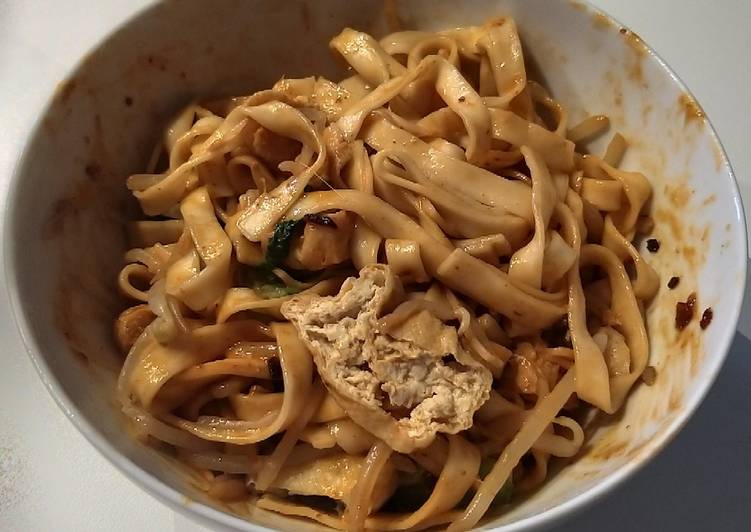
Hello everybody, it’s Drew, welcome to my recipe site. Today, I’m gonna show you how to prepare a special dish, sichuan cold noodles - liang mian. It is one of my favorites. For mine, I’m gonna make it a bit unique. This will be really delicious.
Sichuan cold noodles - Liang mian is one of the most popular of current trending foods on earth. It is simple, it is quick, it tastes yummy. It’s enjoyed by millions every day. Sichuan cold noodles - Liang mian is something which I’ve loved my entire life. They are nice and they look wonderful.
A great summer dish, this Sichuan street snack can be found throughout China. It's got a nice sweet, sour, and savory sauce with an optional spicy kick. This is the most popular Sichuan style cold noodle salad recipe.
To get started with this recipe, we must prepare a few components. You can cook sichuan cold noodles - liang mian using 22 ingredients and 8 steps. Here is how you cook it.
The ingredients needed to make Sichuan cold noodles - Liang mian:
- Get 200 g dry wheat noodles
- Make ready Sesame oil
- Take Sauce
- Take 2 tbsp Chinese sesame paste or
- Make ready 2 tbsp peanut butter and 2 tsp sesame oil
- Get 1 tbsp Sichuan chilli flake oil
- Get 1 tbsp Chinese black vinegar
- Get 1 tbsp light soy sauce
- Take 2 tsp dark soy sauce
- Get 2 tsp sugar
- Take Powdered Sichuan pepper or oil of necessary
- Prepare Ingredients (one or several), 200g in total
- Get Cucumber
- Make ready Carrot
- Get Bean sprouts
- Prepare Leafy greens
- Prepare Fried tofu
- Make ready Garnish (one or several)
- Prepare Garlic
- Make ready Scallions
- Get Toasted peanuts
- Make ready Coriander
Liang mian, cold noodles, is a traditional snack food in China, little known to westerners. It is sold by street vendors and small cafes in many parts of the country; this version is based on one I enjoyed while visiting Chengdu, Sichuan; thus it is firery and intensely flavored. So this is liang mian (凉面), literally "cold noodles," a simple but wonderful dish that has its origin in Sichuan Province. It's one of those foods where every street vendor, every restaurant, every Sichuanese cook will have their own recipe.
Steps to make Sichuan cold noodles - Liang mian:
- Mix together the sauce ingredients in a pot. Add a little water if it's too thick. Adjust sweetness, hotness, numbness and tartness to taste
- Shred the vegetables and slice the tofu
- Boil the noodles according to instructions. When 2 minutes remain add the vegetables and tofu (if using) and mix thoroughly
- Drain and toss with a little sesame oil to prevent the noodles from sticking together
- Let cool then refrigerate (large batches can be prepared and kept ready). I tend to have the first serving hot though!
- Chop the garnishes roughly
- Divide the sauce in 4 bowls. Add the noodle-vegetable-tofu mix, then sprinkle the garnishes on top
- Serve with extra chilli flake oil. Have each guest mix their noodles with the sauce thoroughly before eating!
So you should experiment and make it your own. Liang Mian. (Chinese cold sesame noodles). This noodle dish originated in the Szechuan countryside. It comes together in a snap and tastes great. A Taiwanese version, called ma jiang mian, has a sauce that is a little soupier.
So that is going to wrap it up with this special food sichuan cold noodles - liang mian recipe. Thanks so much for your time. I’m confident you can make this at home. There is gonna be interesting food at home recipes coming up. Don’t forget to save this page on your browser, and share it to your loved ones, friends and colleague. Thank you for reading. Go on get cooking!