Hey everyone, it is Louise, welcome to my recipe page. Today, we’re going to make a special dish, homemade miso. It is one of my favorites. For mine, I am going to make it a bit tasty. This will be really delicious.
Making your own homemade miso from scratch is fun and is not hard to make. It is totally worth the effort and time! There are many regional styles and traditional ways to make miso and the Japanese are the masters of this ancient fermented food.
Homemade Miso is one of the most favored of recent trending foods on earth. It’s enjoyed by millions daily. It’s easy, it’s fast, it tastes yummy. Homemade Miso is something that I have loved my entire life. They are fine and they look fantastic.
To begin with this particular recipe, we have to first prepare a few components. You can have homemade miso using 5 ingredients and 25 steps. Here is how you can achieve that.
The ingredients needed to make Homemade Miso:
- Take Dried soy beans
- Prepare Dehydrated rice malt (or use 1.5 kg of fresh rice malt)
- Get Natural salt
- Take Water
- Prepare cm Kombu (optional)
Perfect for an appetizer or light, warming lunch. First, miso takes just an hour or two of active prep but needs at least six months to a year to ferment. Next, miso doesn't require a lot of technical knowledge, but technique can make or break the finished product. Lastly, miso is one of the most forgiving fermented foods, and at most you risk a little surface mold you can scrape off.
Instructions to make Homemade Miso:
- The day before you make the miso, rinse the soy beans well and soak in plenty of water. The soy beans will swell up to several times their original size, so soak them in a large container.
- Put the soy beans and a bit more water than the soy beans in a pot and bring to a boil.
- When the beans come to a boil, skim the scum that foams at the top until the surface is clean. Keep the heat around medium-high. Remove any loose skins, too.
- If cooking in a pressure cooker: Divide the soy beans into amounts that can be cooked in your pressure cooker, and cook them in several batches. Put a small lid that sits on top of the beans inside the cooker (a drop lid or otoshibuta) and cook under pressure for 15 minutes. Let it cool down naturally.
- If cooking the beans in a regular pot: Simmer over low heat for about 2 hours.
- Crumble the rice malt while the soy beans are cooking. This goes quickly if you rub the dried rice malt between your hands. Set aside one handful of salt, and work the rest of the salt into the rice malt well with your hands.
- When the soy beans are soft enough to mash between your fingers, drain them into a colander, leaving 1 cup (200 ml) of the cooking liquid in reserve.
- Mash the soy beans with a potato masher while they're still hot. To mash them up easily all at once, put them in a sturdy plastic bag and pound on them with a rolling pin. You can also mash them with your hands and feet.
- When the soy beans have cooled down to about body temperature, add the salted rice malt, and mix it all up. Try not to crush the rice malt.
- If you mashed up the beans in a bag, just add the rice malt to the bag and mix.
- Add the reserved cooking liquid, little by little, until the mixture holds its shape when you press it into a ball with your hands.
- If the mixture is too moist, it will mold easily, so be careful. About 1/2-2/3rds cup (100-130 ml or so) of liquid should be enough.
- Wash a resealable container or tub (there are cheap large tubs for making pickles for sale in Japan, which are perfect), let it dry, then sterilize it with white liquor or any other high-alcohol content liquor (like vodka).
- Use a double layer of large plastic bags, and put it inside the tub.
- Form the soy bean mixture into fist-sized balls, and slam the balls into the tub. Throw them as hard as you can to release any air pockets. Any air would cause the miso to mold!
- Level out the surface while firmly pressing down on the mixture. Sprinkle the reserved salt over the surface evenly, and add the kombu.
- Wipe any soy beans from the sides of the tub with a paper towel soaked in alcohol as completely as possible. Press a piece of plastic wrap tightly on the surface of the miso, and seal up the plastic bag.
- Place a drop lid (or a plate) that has been sterilized with alcohol on top of the sealed bag, and weigh it down with a 1 kg weight. You could use a well-washed stone in a plastic bag as the weight.
- Lastly, put the tub in a plastic bag so that dust doesn't get inside.
- Store the tub in a warm place in the winter, and in the spring, store it in the coolest place in the house.
- Around June or July, turn the miso over. Stir it up from the bottom, smooth out the surface,and cover it evenly with a thin layer of salt.
- Cover the surface with plastic wrap, put the tub in a plastic bag and tie it up. If there is no liquid on top of the miso, reduce the weight by 1/2. If there is liquid on the surface, remove the weight.
- If any miso gets on the lid or the rim of the tub, wipe it off with alcohol. In the summer months, some mold may grow, in which case just scrape it off and add salt to where the mold was growing.
- Check it once in a while to see if any mold has grown. Otherwise, just leave it alone. It will be ready to eat in October to November (if you make it at the beginning of the year). Aim to eat it up within a year.
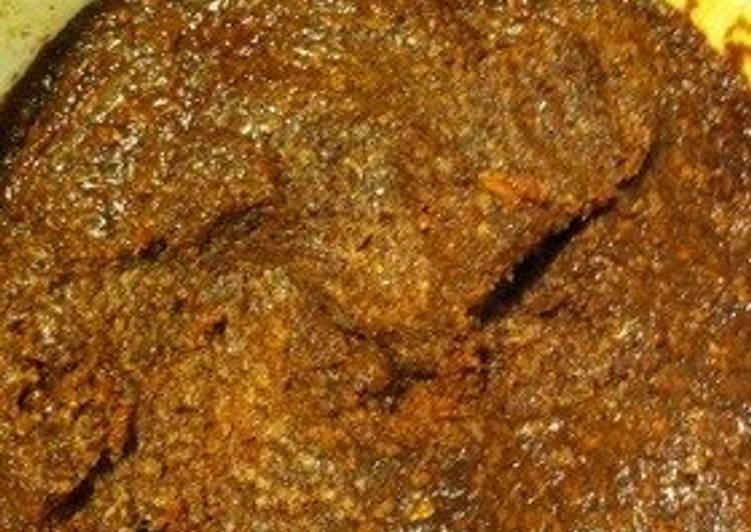
- By November, it became a mold-free, delicious miso!
Miso is a funky, salty-sweet, umami-rich paste of mashed, koji-kin inoculated and fermented grains or legumes, that forms the basis of much of Japanese cuisine. It is an ingredient rich in taste and function: whisk a barley-heavy miso into dashi for a wintry miso soup, Mash a mellower miso into butter for a chicken thigh glaze that tastes like caramel corn. You can use yellow, white, or red miso paste for the soup, depending on your preference. You will also need dashi, which is made of dried kelp (seaweed) and dried bonito (fish), and can be purchased in granules or powder form in conveniently-sized jars. But at last I gathered the courage to try and make my own miso ramen (of course using chicken broth, ready made miso and precooked ramen).
So that is going to wrap it up with this special food homemade miso recipe. Thank you very much for your time. I’m sure you will make this at home. There is gonna be interesting food in home recipes coming up. Don’t forget to save this page on your browser, and share it to your loved ones, colleague and friends. Thanks again for reading. Go on get cooking!